
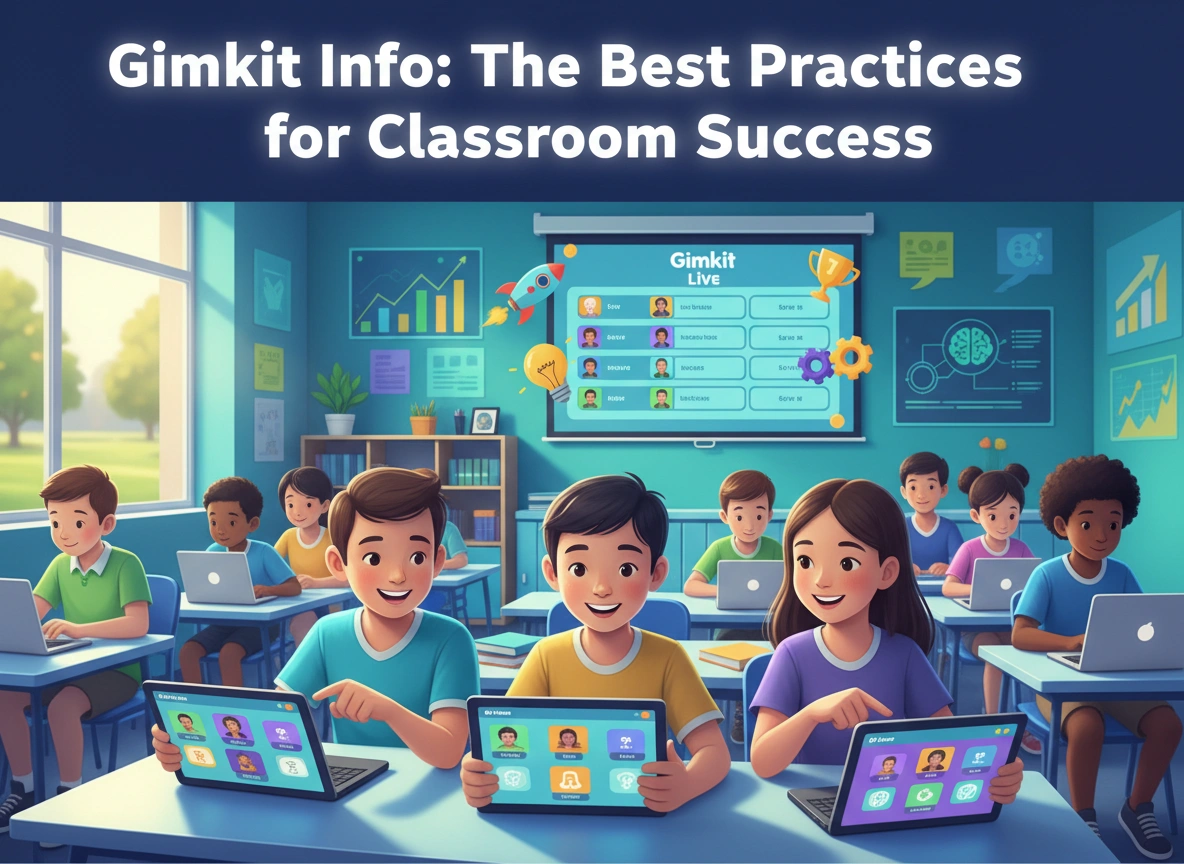
Gamification has transformed the modern classroom. It has taken the sometimes repetitive task of review and assessment and turned it into an event that students actually look forward to. While many platforms have entered this arena, Gimkit stands out as a unique, high-energy option that combines quiz-based learning with strategy and economics.
Developed by a high school student who felt classroom games could be more engaging, Gimkit has rapidly evolved into a staple for educators worldwide. But simply launching a game isn’t enough to guarantee learning outcomes. To truly harness the power of this platform, teachers need to move beyond the basics. This guide explores the best practices for using Gimkit to drive classroom success, ensuring that fun and learning go hand in hand.
Understanding the Gimkit Ecosystem
Before diving into advanced strategies, it is essential to understand what makes Gimkit different. Unlike standard quiz platforms where points are arbitrary, Gimkit uses an in-game currency system. Students answer questions to earn money, which they can then reinvest to purchase upgrades and power-ups. This adds a layer of strategic thinking that most other platforms lack.
Students aren’t just recalling facts; they are making decisions. Should they buy an upgrade that increases the money they earn per question? Should they purchase insurance to protect against wrong answers? Or should they sabotage a leading team? This dynamic keeps students engaged for longer periods because the gameplay evolves as the session progresses.
The Core Benefits for Student Learning
- Repetition Without Boredom: Mastery often requires repetition. In a traditional setting, answering the same question five times is tedious. In Gimkit, seeing a question again is an opportunity to earn easy cash. Students unknowingly drill core concepts until they are second nature.
- Strategic Thinking: The economic model forces students to think critically about resource management. They learn risk versus reward in a low-stakes environment.
- High Engagement: The fast-paced nature and the ability to influence the game state (via power-ups) keep even reluctant learners involved.
- Immediate Feedback: Students know instantly if they are right or wrong, allowing for immediate correction of misconceptions.
Best Practices for Implementation
To maximize the educational value of Gimkit, consider these strategic approaches tailored for different classroom needs.
1. Aligning Game Modes with Learning Goals
Gimkit offers various game modes, and selecting the right one is crucial for your specific lesson objective.
- Classic Mode: This is the standard “every student for themselves” mode. It is excellent for quick, low-stakes review or when you want to gauge individual mastery of a topic. It works best as a bell-ringer or an exit ticket.
- Team Mode: Collaboration is a key 21st-century skill. In Team Mode, students pool their earnings. This encourages communication as students must coordinate who buys which upgrades. Use this for complex topics where peer teaching can help bridge knowledge gaps.
- Trust No One: Inspired by social deduction games like Among Us, this mode adds a layer of mystery. Students must identify the “impostors” while answering questions. This is fantastic for building classroom culture and breaking up the monotony of standard test prep, though it may be less focused on pure content drilling than Classic mode.
- The Floor is Lava: This cooperative mode requires the entire class to work together to keep the game going. It is perfect for building a sense of community and collective achievement.
Actionable Tip: Don’t stick to one mode. Rotate them to keep the experience fresh. If you notice the energy dipping during a Classic game, switch to a Team mode next time to reinvigorate the class.
2. Crafting Quality Question Sets
The game is only as good as the questions it asks. If the content is poorly structured, the gamification elements become a distraction rather than a tool.
- Scaffold Your Questions: Start with easier recall questions to help students build their in-game bankroll quickly. As the set progresses, introduce more complex, higher-order thinking questions. This mirrors the game’s economy—students need money (confidence) before they can invest in big upgrades (complex problems).
- Use Images and Audio: Differentiate your instruction by including visual aids or audio clips. This is particularly helpful for language learners or younger students who may struggle with text-heavy questions.
- Feedback Integration: Gimkit allows you to add explanations for wrong answers. Take the time to fill this out. When a student gets a question wrong, they shouldn’t just see “Incorrect.” They should see why it was incorrect. This turns a mistake into a micro-learning moment.
3. Managing the “Chaos”
Gimkit can get loud. The excitement is palpable, but it can easily veer into distraction if not managed.
- Set Ground Rules: Before the first game, establish clear expectations. “We can be excited, but we cannot scream.” “Sabotage is part of the game, but we don’t get angry at classmates.”
- Control the Shop: As the teacher, you have control over what power-ups are available. If you find that “sabotage” items (like freezing another player’s screen) are causing too much conflict, you can disable them in the game settings. This allows you to tailor the competitive level to your specific group of students.
- Duration Matters: A 10-minute game is usually the sweet spot. Anything longer, and the gap between the leaders and the rest of the class can become insurmountable, leading to disengagement. Anything shorter, and students don’t have time to utilize the strategy upgrades.
4. Leveraging Data for Intervention
One of the most underutilized features of Gimkit is the post-game report. It provides a wealth of data that can inform your future instruction.
Don’t just close the tab when the game ends. Look at the “Student Overview.” It will show you exactly which questions were missed most frequently.
- Class-Wide Reteaching: If 60% of the class missed question #4, stop the game and reteach that concept immediately. The data has just highlighted a gap in your instruction or a misunderstanding among the students.
- Individual Support: Identify students who struggled to earn money or had a low accuracy rate. These students might need one-on-one intervention. The game environment can sometimes mask struggling students because they might be quiet, but the data will reveal who is truly grasping the content.
5. Gimkit as Homework (Assignments)
Gimkit isn’t limited to live classroom play. You can assign “Kits” as homework. This allows students to work through the questions at their own pace without the pressure of a ticking clock or competitive peers.
Best Practice: Use the assignment feature for mastery learning. You can set the assignment so that it is only “complete” when a student reaches a certain monetary goal. This ensures they continue answering questions until they have achieved a level of proficiency, rather than just clicking through to finish.
Advanced Strategies: Student Creation
The highest level of learning is creation. Instead of always creating the Kits yourself, have students create them.
Assign a topic and ask students to generate five questions each using the “KitCollab” feature. This feature allows the whole class to contribute questions to a single game in real-time.
- Why this works: Writing a good question requires a deeper understanding of the material than simply answering one. Students have to think about the correct answer and plausible distractors (wrong answers).
- The Result: You end up with a class-generated review game. Students are infinitely more invested in playing a game that includes questions they wrote themselves. It gives them ownership over their learning.
Balancing Competition and Equity
A common criticism of gamified learning is that it favors the quickest students or those who are already high achievers. Gimkit addresses this through its upgrade system.
A student who is slower to answer but thinks strategically about their upgrades can often beat a student who answers quickly but poorly manages their resources. Explicitly teach this to your students. Show them that “Streaks” and “Money Per Question” upgrades are often more valuable than raw speed.
Furthermore, use the “Handicap” feature if necessary. You can start students with different amounts of cash to level the playing field, ensuring that everyone remains competitive and engaged.
Conclusion
Gimkit is more than just a flashy distraction; it is a robust educational tool that, when used correctly, drives engagement, reinforces content mastery, and develops critical thinking skills. The key to success lies in intentionality. It is not about filling time; it is about using the unique economic mechanics of the game to serve your learning goals.
By varying game modes, utilizing data for targeted intervention, and empowering students to become creators, you transform Gimkit from a simple game into a powerhouse for classroom success. As education continues to evolve, tools that meet students where they are—in a world of interactivity and instant feedback—will remain essential. Gimkit provides that bridge, making the hard work of learning feel a lot more like play.
Please visit website for more info.