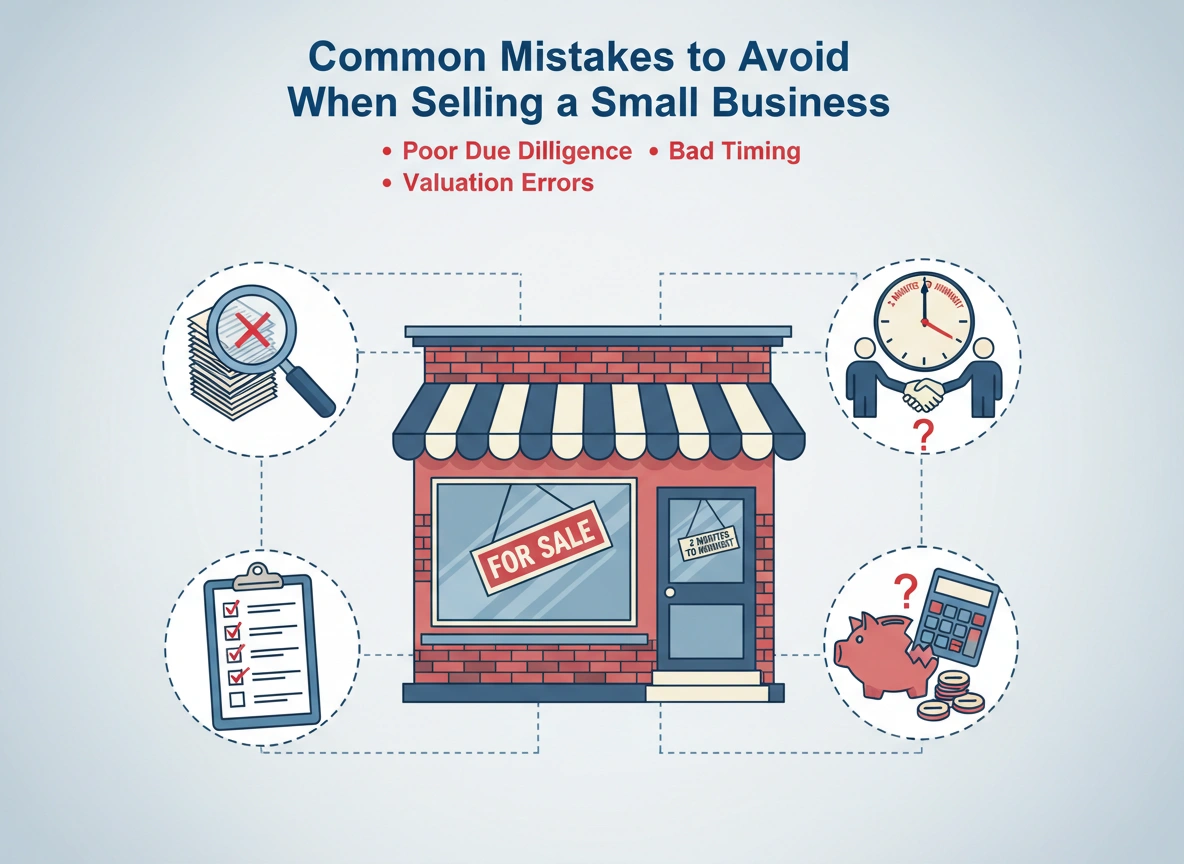
Selling a small business is often the culmination of years, sometimes decades, of hard work. It represents a significant financial and emotional milestone for most entrepreneurs. Yet, despite the high stakes, many business owners approach the sale process without the same rigor they applied to building their companies. The result? Money left on the table, stalled negotiations, or deals that fall apart entirely at the eleventh hour.
Navigating a business exit requires strategy, foresight, and a clear understanding of the pitfalls that can derail a successful transaction. By recognizing these common errors early, you can position your company to attract the right buyers and secure the valuation you deserve.
Here are the critical mistakes to avoid when selling your small business and actionable advice on how to steer clear of them.
1. Entering the Market Unprepared
One of the most pervasive errors sellers make is rushing to market before the business is truly “sale-ready.” You might wake up one day feeling burned out and decide it’s time to sell, but emotional readiness does not equate to operational readiness.
Buyers conduct rigorous due diligence. If your financial records are messy, your contracts are unsigned, or your inventory counts are estimates rather than facts, you signal risk. Risk lowers value. A buyer who has to untangle a web of commingled personal and business expenses will either walk away or demand a significant discount to cover the potential liabilities they might inherit.
Actionable Advice: Start preparing for a sale at least 12 to 24 months in advance. Treat this period as “pre-due diligence.” Audit your own financials, organize your legal documents, and ensure your standard operating procedures (SOPs) are documented. If your business relies entirely on knowledge stored in your head, start transferring that to paper or digital systems immediately.
2. Incorrect Valuation: The Price Trap
Pricing a business is art and science, but many owners rely too heavily on emotion. You know the sweat equity you poured into late nights and weekends, but a buyer is only interested in future cash flow and risk.
Two common extremes occur here:
- Overvaluation: Setting an unrealistic price based on “potential” rather than proven performance. This leads to the business sitting on the market for months, becoming “stale” inventory that buyers assume has hidden flaws.
- Undervaluation: Pricing the business too low for a quick exit, leaving significant wealth behind. This often happens when sellers use simple revenue multiples without accounting for unique assets like intellectual property or recurring revenue models.
Actionable Advice: Do not guess your business’s worth. Hire a professional business appraiser or a valuation expert. They will use objective methods—such as SDE (Seller’s Discretionary Earnings) or EBITDA (Earnings Before Interest, Taxes, Depreciation, and Amortization) multiples—specific to your industry. A third-party valuation also provides a defensible document you can present to buyers to justify your asking price.
3. Failing to Maintain Confidentiality
In the excitement or anxiety of selling, it can be tempting to confide in employees, vendors, or even customers. This is a dangerous misstep. If word gets out that you are selling, panic can ensue. Key employees might start looking for new jobs fearing instability. Vendors might tighten credit terms. Competitors might use the news to poach your clients.
A breach of confidentiality can erode the value of your business before you even receive an offer. If a buyer sees your staff fleeing or revenue dipping because of rumors, they will likely lower their offer or withdraw.
Actionable Advice: operate on a “need-to-know” basis. Use non-disclosure agreements (NDAs) strictly with any potential buyers before releasing sensitive information. If you use a broker, ensure they market the business “blindly”—describing the opportunity without revealing the specific name or location until the potential buyer has been vetted and an NDA is signed.
4. Making Yourself Irreplaceable
If you are the business, you don’t have a business to sell; you have a job. Buyers are looking for an investment that can run without the current owner’s daily intervention. If every client relationship, operational decision, and technical process relies on you, the business has little value without you.
This is often called “key person risk.” When a buyer sees this, they worry that once you hand over the keys, the revenue will evaporate. They may require an extended “earn-out” period where you must stay employed by the company for years to receive your full payout—defeating the purpose of a clean exit.
Actionable Advice: Work yourself out of a job. Empower a management team or key employees to handle day-to-day operations. Ensure client relationships are institutionalized, not personal. The more the business thrives while you are on vacation, the more valuable it is to a prospective buyer.
5. Attempting to DIY the Sale
Entrepreneurs are naturally self-reliant. You built the business, so you assume you can sell it. However, selling a company is a complex legal and financial transaction that differs vastly from selling a product or service.
Going it alone often leads to emotional negotiating. When a buyer critiques your business during due diligence, it feels personal. You might react defensively rather than strategically. Furthermore, while you are busy trying to find buyers and manage due diligence, your focus slips from running the actual business. If performance dips during the sale process, it can kill the deal.
Actionable Advice: Assemble a deal team. This should include:
- An M&A Advisor or Business Broker: To find buyers and manage the process.
- A Transactional Attorney: Someone specialized in M&A, not just general business law.
- An Accountant/CPA: To handle tax structuring and financial presentation.
While these professionals cost money, they almost always pay for themselves by securing a higher sale price and preventing costly legal mistakes.
6. Poor Timing
Timing is everything. Selling when you are desperate, burnt out, or facing a market downturn puts you in a weak negotiating position. Conversely, many owners hesitate to sell when things are going well because they want to ride the wave a little longer.
The best time to sell is when the business is on an upward trajectory. Buyers pay a premium for growth. If your revenue is declining or flatlining, buyers will wonder if the business has peaked and is now on the way down.
Actionable Advice: Monitor your industry trends and the broader economy. If your sector is consolidating or technology is shifting, it might be the right time to exit. Ideally, plan your exit strategy years in advance so you can choose to sell during a peak year, rather than being forced to sell during a slump due to health or personal issues.
7. Neglecting the “Soft” Due Diligence
Financials are critical, but so is the “story” of your business. Buyers invest in culture, reputation, and brand potential. A common mistake is presenting a sterile spreadsheet without conveying the intangible value of the company.
Similarly, sellers often fail to vet the buyer. Not all cash is equal. Does the buyer share your values? Do they intend to fire your loyal staff immediately? If you are carrying a seller note (financing part of the deal yourself), a buyer who runs the business into the ground means you might never see that money.
Actionable Advice: Craft a compelling narrative about your business’s history and future potential. When evaluating buyers, ask tough questions about their post-acquisition plans. If the deal involves seller financing, treat the buyer like a borrower applying for a loan—vet their creditworthiness and track record carefully.
Conclusion: The Path to a Successful Exit
Sell a small business is a marathon, not a sprint. The owners who walk away with the best terms and the highest checks are those who treat the sale as a strategic project rather than a sudden event.
By avoiding these common mistakes—undervaluing your asset, failing to prepare, breaching confidentiality, and ignoring professional advice—you protect the legacy you’ve built.
Summary of Best Practices:
- Start Early: Begin exit planning 2 years before you intend to sell.
- Clean Your Books: Ensure financials are transparent, audited, and easy to understand.
- Hire Experts: Don’t let the cost of a broker or attorney deter you from expert guidance.
- Stay Focused: Keep running your business aggressively until the check clears.
- Know Your Worth: Rely on data, not gut feeling, for valuation.
Your business is likely your most valuable asset. Give the sale process the respect and preparation it deserves to ensure your final chapter as an owner is a triumphant one.