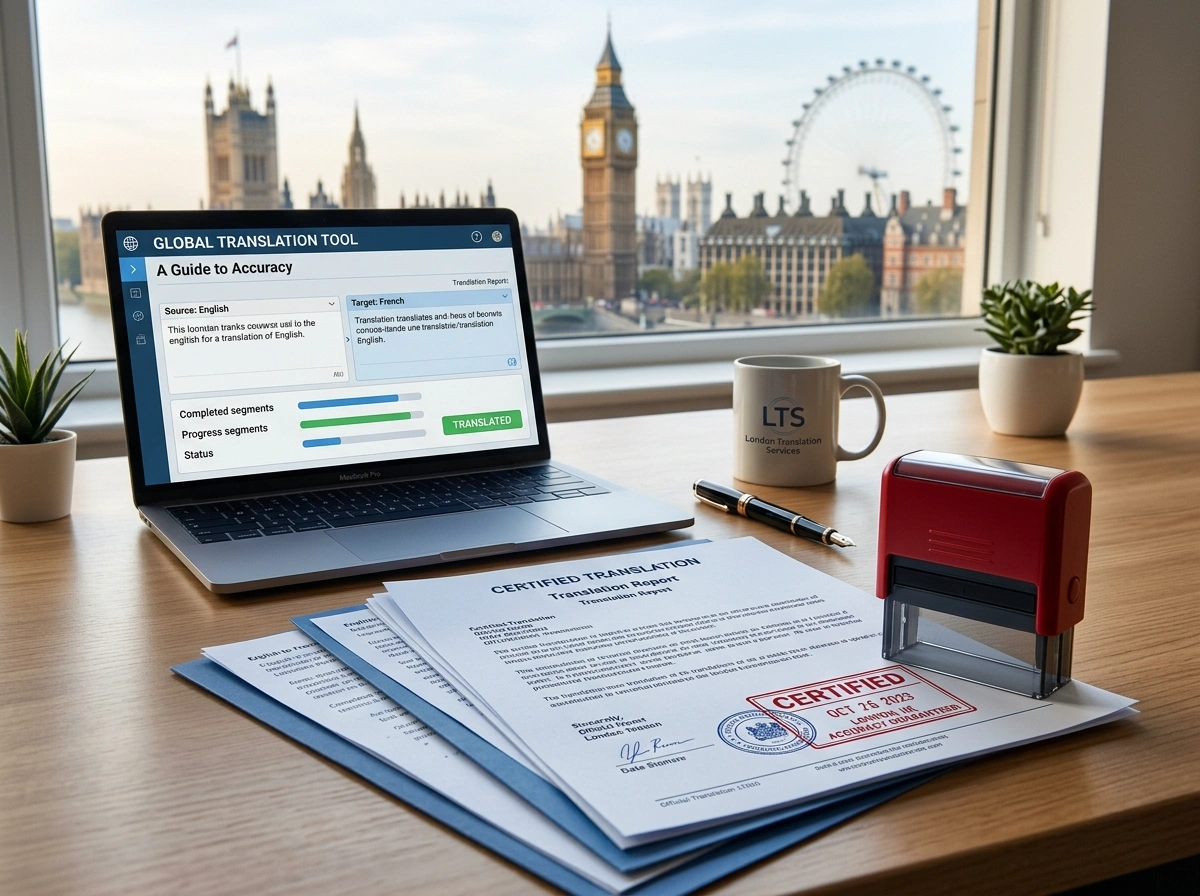
London is one of the most linguistically diverse cities on the planet. According to recent data, over 2.2 million residents were born outside the UK, and more than 100 languages are spoken across the capital’s 32 boroughs. This incredible mix of cultures creates a constant need for clear, accurate communication across language barriers.
Whether you are an individual applying for a visa, a student hoping to enroll in university, or a business expanding operations, submitting foreign-language documents to official UK institutions requires a specific level of proof. You cannot simply translate the text yourself. Government bodies and academic institutions demand absolute precision and professional accountability.
This comprehensive guide explains exactly how professional translation works in the UK capital. You will learn why strict accuracy matters, which institutions require these official documents, and how to select the right service for your specific legal or academic needs.
The Importance of Accuracy in Global Communication
Accuracy goes far beyond swapping words from one language to another. Legal frameworks, academic grading systems, and medical terminologies vary wildly between countries. A single mistranslated term on a birth certificate or business contract can lead to application rejections, delayed court proceedings, or lost business opportunities.
For official bodies, a certified document acts as a guarantee of authenticity. The translation must perfectly reflect the original text, including the layout, official stamps, and signatures. If a translation is poorly executed or lacks the correct certification credentials, authorities will immediately reject the application. This forces applicants to start the process over, often resulting in missed deadlines and additional non-refundable processing fees.
Professional translators possess deep subject-matter expertise. They understand the specific legal phrasing expected by UK authorities and ensure the final English document carries the exact legal weight as the foreign-language original.
When and Why Certified Translations are Required
Different institutions have strict criteria for accepting foreign-language documents. Understanding these rules is crucial for anyone navigating the UK system.
Home Office and UKVI Applications
UK Visas and Immigration (UKVI) requires certified translations for any supporting documents not written in English or Welsh. This includes birth certificates, marriage certificates, police records, and bank statements used for visa and settlement applications. The Home Office explicitly requires that the translation includes a signed confirmation of accuracy from a qualified professional, alongside the date and the translator’s contact details.
Legal and Court Proceedings
The UK legal system demands flawless documentation. If you are involved in proceedings at the Royal Courts of Justice, the Old Bailey, or local immigration tribunals, any foreign-language evidence must be professionally translated. This ensures that judges, solicitors, and all involved parties have a transparent understanding of the facts. Employment tribunals and county courts also strictly enforce these documentation rules.
University Admissions
London is home to some of the world’s most prestigious universities, including UCL, Imperial College, and the London School of Economics (LSE). International students applying to these institutions must provide translated versions of their academic transcripts, diplomas, and degree certificates. Admissions boards rely on these precise translations to accurately evaluate overseas qualifications against UK academic standards.
Key Features of Professional Translation Services
Not all translation agencies provide the same level of service. A truly professional offering will include several standard features to ensure your documents are accepted without question.
Official Certification
In the UK, a certified translation is accompanied by a signed statement from the translator or the translation company. This statement confirms that the translated document is a “true and accurate translation of the original document.” It provides institutions with the necessary accountability to process your application.
Broad Language Capabilities
A robust agency handles a massive variety of language pairs. Given the demographics of the UK capital, professionals frequently process documents in Polish, Bengali, Arabic, Urdu, and Romanian, alongside standard European languages like French and Spanish. A comprehensive service will have qualified linguists ready for even the most complex dialects.
Apostille Services
If you plan to use a UK-issued translation in another country, it may require an apostille. This is an official government certificate attached to the translation, making it legally valid in member countries of the 1961 Hague Convention. Professional agencies often handle the apostille process on your behalf, saving you a trip to the Foreign, Commonwealth & Development Office.
Navigating the London Market for Certified Translations
Finding the right provider can feel overwhelming in a city as large as London. Some boroughs have incredibly high concentrations of non-English speakers. For example, in Newham and Tower Hamlets, a significant portion of the population was born outside the UK. Consequently, local demand for translation is consistently high.
When selecting a provider, you should prioritize agencies with a proven track record of Home Office compliance and fast turnaround times. You want a team that uses qualified human translators rather than relying heavily on automated software, as machine translation cannot provide the legally binding certification required by UK authorities.
If you need a reliable provider for university admissions, legal evidence, or immigration paperwork, you can explore professional certified translation services london to ensure your documents meet all official requirements. Reputable services usually offer transparent pricing, often starting from around £29.95 per page, and provide secure digital delivery so you can access your documents from anywhere in the city.
Securing Your Official Documents
Navigating bureaucratic requirements is rarely enjoyable, but securing the right documentation does not have to be a painful process. By understanding the specific requirements of the institution you are applying to, you can avoid costly delays and rejections. Always verify that your chosen translation partner complies with UKVI standards and provides the necessary signed certifications.
Take the time to review your requirements, gather your original documents, and partner with a qualified professional to handle the translation. Getting it right the first time will give you peace of mind and keep your official applications moving forward smoothly.